Showing posts with label reflections. Show all posts

Tuesday, May 21

The shortcomings of science, theology and rational thought

As some of you may know, I am presently working on my Doctorate of Ministries.  My present coursework has had a strong emphasis on theology (specifically 20th century theologians like Chardin, Kung, Lonergan and their ilk) and has been exceptionally thought provoking.  One of the most profound things which has come from this study and reflection is a simple observation as to the inadequacy of it all.

Theology is "the systematic and rational study of concepts of God and its influences and of the nature of religious truths, or the learned profession acquired by completing specialized training in religious studies, usually at a university or school of divinity or seminary." ( Wordnetweb.princeton.edu, SN: Theology)  The key words here are 'rational'  and 'learned'.  It is a study of the mind.  While this is all well and good (and I mean that...it is good and fruitful), it has a fundamental flaw, which is in dealing with the primary source - God.

Encounters with the Divine, which are the core of faith, are essentially experiential and a-rational.  It is not that they (and their fruits, Faith) are unfounded or  lack reason, but rather they are entirely beyond the capacity for systematic, logical examination.  At base, they are matters of the heart, not of the mind.  This shortcoming is not a new phenomenon or startling revelation.  It is what the Angelic Doctor was referring to when he wrote "To one who has faith, no explanation is necessary. To one without faith, no explanation is possible."

A systematic, rational and learned approach to an inquiry of study has great value, to be sure, but to describe love as a set of biochemical receptor changes or compassion in statistical trend analysis misses the entire point.  Such things defy reason, analysis or explanation.  As Balzac said more succinctly, "We love because we love."

Monday, February 25

Where two or three are gathered....

Yesterday, the folks of Colouful Colorado were treated to a reverse-Turnerism, wherein the world was drained of its myriad hues and everything was white and shades of grey.  Driving to mass, there were whiteout conditions most everwhere.  Yet, a dozen or so of us 'committed catholics' (or catholics who should be committed) gathered, sang, prayed and were in communion with each other and the Divine.

Our guiding lenten imagery centers around the Labyrinth and the homily was about how, even though the path may not seem clear to us, if we hold our vision on the Divine above and follow Him, we will be led through the twists and turns till we arrive at the center.  Considering the weather conditions outside, I found it particularly apt.

As masses go, it was the most intimate, with an informality which is not normally seen even in our rather informal community.  And, yes....the Divine was there.

Thanks, Dad.

Tuesday, February 19

Further reflection: a more positive approach

After posting, there is something else which needs to be said, lest it be considered that all of my experiences, learning and study have jaded vision such that there is no hope.

Consider the words of the Master:
 “No one can serve two masters; for either he will hate the one and love the other, or he will be devoted to one and despise the other. You cannot serve God and wealth."

“For this reason I say to you, do not be worried about your life, as to what you will eat or what you will drink; nor for your body, as to what you will put on. Is not life more than food, and the body more than clothing? ....? And who of you by being worried can add a single hour to his life? .... You of little faith! Do not worry then, saying, ‘What will we eat?’ or ‘What will we drink?’ or ‘What will we wear for clothing?' For the Gentiles eagerly seek all these things; for your heavenly Father knows that you need all these things. But seek first His kingdom and His righteousness, and all these things will be added to you."

"So do not worry about tomorrow; for tomorrow will care for itself. Each day has enough trouble of its own." (Mat. 6)

One cannot serve both the Lord of Heaven and the god of earthly riches.  Decide who you love more, and follow them with your whole heart.  If one has chosen to serve the Lord of Heaven, then there is no reason to worry about the 'little things' of this world.  If one has chosen to serve the master of money, then matters of the next world are of no consequence.

Who do you love?  Who do you trust?

The Divine will care for you, if you trust Her.  Follow the Voice and He will deliver you, no matter where the path leads.

Sunday, October 7

Reflections about Co-creation

So, there is this idea called co-creation, wherein the Universe and our lives are not unilaterally set in place by the Divine nor is it by our will alone that our fates are chosen, but rather it is our interactions with that which She has made which forms what is and what will be.  In short, it is our own Free Will, combined with His hands, which charts the course of the Universe.  Of course, our individual will, no matter how free, is not usually a huge factor in this process but it IS a factor nonetheless.  When we act in a collective manner using our combined Free Will to choose a particular path, we work in concert with Her power to change the world.  This comes about most poignantly in the celebration of Eucharist and, more specifically, the physical elements involved.

Wheat and grapes, created by the Divine, raised and collected by humans, are transformed by us into bread and wine which we then offer up and ask for the Divine to transform into the Bread of Life and Salvic Cup.  Without humanity, the wheat would wither and the grapes die on the vine.  Without the Divine, they would never have been.  Without the work of human hands, there is no bread or wine to bless and without the touch of God, they would be but empty symbols.

Looking in a larger sense, the entire story of Christianity is this interplay.  The crux of the Gospel is that God (fully divine) became flesh (fully human), dwelt amoung us and, by word and deed, showed that fully human and fully Divine is not only possible, it is how we are supposed to be.  As St. Athanasius (amoung others) put so long ago, "God became man so that man may become God."

Thursday, September 20

Reflections on being reborn

It is not uncommon for me to talk through some of my thoughts on subjects in private, trying to work out kinks and derive greater understanding about things which my gut says is true.  This means that the dog has a much better understanding of ecclesiology than the cat (for she normally wanders off), though the cat would argue that she has a better grasp of theology as she is certain that there is a god (and she is Her).

During one of these pacing/muttering episodes, I was reminded of Nicodemus' conversation with Christ in John 3.  Recall that Nicodemus was a rabbi, a Pharisee and a member of the Sandhedrin - the jewish equivalent of a first century cardinal.  In short, Christ is not talking to a simple farmer or fisherman, but to a learned member of the clergy.

Christ talks about being born again and Nicodemus asks how this works in physical terms.  No no, replies Jesus, I'm talking figuratively, that ones being is reborn through water and the Spirit (It is likely that Christ is referring to the Mikveh, the ritual purification rite involving immersion in water, which is what John the Baptist was doing).  Physical is physical and Spirit is Spirit, so don't be all surprised when I say that you need to be reborn in the Spirit.

Then Christ says that the Spirit blows where it wills, we can see the effects, but we have no idea where it comes from or goes and that's how it works for everyone born in the Spirit.  This is where the train takes a turn.  I make this break because it really appears that the conversation is shifting.  Nicodemus asks "how is this possible?" Christ then goes into some depth of the Universality of God

This rebirth is not a matter of ashes and fire, but of paradigm shift.  The world isn't as you saw it before, but much bigger, greater, more complex and wonderful than you previously imagined.  It's not about rules and regulations, ancient pacts and dusty tomes.  It is about the living world in the here and now, immediate and direct in a way which can't be rationalized or ignored.

It is about encountering God in Her creation.

Thursday, July 26

reflections on plants, people and sanctuary

A potted plant is one which is trained, groomed, doted over and requires great attention for it to grow at all.   As it sits, it becomes dependent on outside sources for water and food.   With its roots bound and all the tender care pored over it, the plant can never grow to its full potential.

To grow, thrive and succeed, a tree must be planted outside in the ground where wind, water, fire, insects, disease and drought threaten to kill it.  It must be tested and tried, forced to become independent and find creative ways to survive.

It is easy and right to wish to provide a safe haven for those who we see as troubled, but there is a danger in this.  Temporary refuge to hold people over is like watering the trees in the ground, giving them emotional water and spiritual food so that they may have respite. If that sanctuary becomes more than an emergency measure, then each day the people run the risk of sacrificing their independence, limiting their potential and even causing developmental dieback as they surrender parts of themselves for the illusion of security.

Better, then, to meet people in the field...water, feed and tend to them there and allow them to flourish in their own way and in their own time. That is where compassion is.

Tuesday, July 3

Synergy and Harmony and Wisdom will come....

So, I am in the middle of writing a response to a comment when it happened again.  That point when all the parts fit into place and, for an instant, things make sense.  So, lets see if I can capture entlightenment in a bottle, ya?

Taking the following as premises:

1. That we all carry within us the spark of the Divine, created in Her image and His likeness, who created all that was and is and shall be.

2. We all have the capability to discern the presence and workings of the Divine in Creation.

3.As children of the Divine, we have the capability to affect creation (both mundanely and esoterically) and, more importantly, to work with the Divine to manifest in Creation that which we put as intention.

This co-creation is an expansion of the theological Synergism I talked about some time ago, though at that point I had no idea of the formal concept. Springboarding off of that idea, I wish to explicitly state that we, as humans, cannot do this without working with the Divine.  It is through the interplay of Creator and created that creation is manifested.

Here is the rub, though.  Our understanding of the Universe and the Divine is limited and the more constrained it is by pre-conceptions, misperceptions and internal traps, the less capable we are of engaging in that interplay.  Further, those who have spent the most time studying, writing, lecturing and explaining matters of religion and spirituality are, generally speaking, the most constrained by the aforementioned conceptions.  That is the basis of Taoist tzu-jan, (self-such).  By losing inculcated 'explanations' and returning to direct experience, one gains wisdom and understanding.

The more we put down the books and walk in the brook, the more we understand that creation, created and Creator are braided strands, the more we see the Christ within, the Christ in all...the more we know that we, each and every one of us, has the power to change the world if we dare to imagine large enough and trust deeply enough in God.


Friday, May 18

Reflections on the Ascension

"Later, n00bs.  LOL"
Yesterday was the Solemnity of the Ascension of the Lord.  I must admit that I have no small ambivalence regarding this particular feast day.  It is not about the event itself, for I am not questioning that Christ 'ascended' (by which I mean the translation to a 'higher plane of being').  Rather, my questions revolve around what the event means and symbolizes.

Do we consider the account to be factually accurate or is it at least partially allegory?  Other than the first part of Acts, the accounts are rather sparse with the Transfiguration accounts (for instance) having substantively more details.

What is the take-away message here?  Is it that God comes down, does all He can (including giving His own life) and after fulfilling every jewish prophesy about the messiah and having taught them everything he can, God is going home so he can be some form of Divine negotiator with himself?

"Becoming"
Alternately, one could say that the spark of the Divine became a fire within a young Nazerene, changing his understanding of the universe and that transformation eventually allowed him to transcend reality as we know it, becoming one with the Divine.

One has a unique deity which becomes mortal long enough to teach, preach, clear his bucket-list of prophesy and have at least the verisimilitude of death, only to come back transformed and then return to himself.  The other has a man who is slowly transcending his own nature through the work of the Divine within us all, showing others how to do the same till he shows that even death is not a barrier. In the end, he ascends to a higher state of being, leaving his teachings behind.

I'm not saying that either path is right.  Perhaps they both are right...or both wrong and there's another way yet.  What I wonder about is which provides us a better understanding of the Divine and how to become closer to Her.  


Tuesday, April 24

Think carefully

Your thoughts direct your energy, which fuels the engine of creation.  Through our thoughts, words and deeds we function as co-creators of our world, having a profound impact upon ourselves and our immediate environment.

Ghandi said "Be the change you wish to see in the world".  By meditating and working towards internalizing that change, one actualizes it in the universe around you.
   
Be mindful about that which you dwell upon. Where your mind is focused is what you are attempting to create in the world.

Monday, February 27

Reflections on the idea of Lent

As we more fully consider the Lenten season, it comes to me that an examination of what Lent is and its meaning to us may be in order.

Traditionally in the catholic churches, Lent is a time for penitential preparation for Easter.  This is a time of fasting and prayer, of sacrifice and of repentance.  More recently, the idea of alms-giving was added to the penitential rites of Lent.

But I would recall that the very word 'Lent' comes from the old high German and means spring-time...literally, the days 'lengten'.  As someone who rises early enough, I can attest that the days ARE lengthening, the darkness of Winter is being driven back and the renewal of the Earth is near.

As the wheel of the year turns to spring, my mind turns to internal renewal and new growth.  It is a time to refresh our commitments, to overhaul our methodologies and to begin again the Good Work.  Yes, one should focus our minds on prayer and on the spiritual, but do so with glad hearts, not long faces.  God is with us and in us and the long nights of winter are coming to an end.  The days lengthen as Lenten days are here and hints of spring are showing even today.  The seeds in our hearts have overwintered and are ready to sprout.  Weed the garden, tend the field and look with joy to the days to come.

Thanks be to God.

Wednesday, February 22

reflections on Ash Wednesday service

Today is Ash Wednesday and there was much that was wonderful about the service this evening.  Beyond all of that, there was a matter which I found striking and moving which (I believe) nobody else saw.

You see, I sang in our choir this evening, so while everyone else is facing the altar, our little group is pointed in the generally opposite direction, which gave me an opportunity to watch this vignette unfold.

The back of the sanctuary is glass, so that those in the narthex area can sit (with crying infants, for instance) and observe/listen without disturbing others. During the distribution of the ashes, a woman comes into the narthex and tentatively goes towards the sanctuary doors, which are closed.  She stops and stands there, obviously unsure if she should continue.

After a moment, one of our priests (who was coordinating the service but not the celebrant) sees the woman.  She goes to the door and opens it, welcomes her inside, briefly explains what is going on and offers her a seat.  All of this is happening in the very back of the sanctuary, where nobody else would normally see.  That simple act, a person (a priest, even) would welcome an outsider during a special mass, speaks more about the practice of religion than classes and books.  This all gets highlighted by the gospel reading.

"Take care not to perform righteous deeds in order that people may see them;" (Mt. 6:1)

Regarding Lent in general, I have a suggestion for those of you who are used to 'giving up' something for Lent.  Instead of meat or coffee or whatever, how about something truly difficult and rewarding.  Try giving up divisiveness, preconceptions of others or judgment.

"For I desire mercy, not sacrifice, and acknowledgment of God rather than burnt offerings."(Hos. 6:8)

Thanks Dad. 


Wednesday, February 8

apologies for not posting, I has a sad

There is a point one reaches where the spittle-flecked invective and shrill, self-righteous cries become too much, when knowledge that honest, well-meaning folk are at each others throats with rage-blinded vehemence which turns into a bitter stew that bores a hole in your soul.

That would sum up my feelings regarding news items in the last week or so. There are so many stories that they start to bleed into one another.  One Million Moms tries to strong-arm J.C. Penney because they hire the hippest lesbian on the planet, the Koman Foundation (the Race for the Cure folks) decides breast-cancer screening is less important than abortions in publicly killing funding for Planned Parenthood, the 'faithful' in an uproar over the government requiring insurance companies to cover contraception as part of prescription plans, Proposition 8 being soundly defeated, ensuring a U.S. Supreme Court rematch.  The list goes on and on.

So yes, I has a sad.  I has a sad for the teens who see adults acting like irrational children, who cannot but equate the God of love and inclusion with hatred and exclusion.  I weep for those who contemplate suicide tonight because parents would turn their own children out into the street because the way God made them isn't what they (or their church) want.  I grieve for those who would believe that acceptance, love and peace are unimportant compared to a morally superior position.

How important is a theological argument when Christ freezes in the street?  What use is moral superiority when the Prince of Peace goes hungry?  Where does the balance lie when weighing doctrinal purity against the blood of the innocent spilled by those who wish to be right more than be a servant of God?

Kyrie eleison
Chirste eleison
Kyrie eleison, Eleison imas olous


Wednesday, January 18

The Original Sin thing

"Don't lay your sins on me, bro!"
From the time I was small, it was drummed into my head that, from birth, all of mankind is a fallen, sinful creation of a perfect, loving God, that I can never do anything right by myself and I (along with everyone other than Jesus) are horrible, craven beasts. Thank you Augustine, Calvin and Knox.  Of course, the culprit here is a snake with an apple, some chick and her overly-trusting husband.

This has always bothered me on a nearly subconscious level, as it defies the notion of a loving creator God.  Ignoring that is counter-intuitive to say a loving God would such a thing (discussed here) or that Original Sin entirely undermines the efficacy of baptism and salvic grace (more in a moment about that), I come to Ezekiel, Deuteronomy and Romans.

"The person who sins will die. The son will not bear the punishment for the father's iniquity, nor will the father bear the punishment for the son's iniquity; the righteousness of the righteous will be upon himself, and the wickedness of the wicked will be upon himself." (Ez. 18:20)

"Fathers shall not be put to death for their sons, nor shall sons be put to death for their fathers; everyone shall be put to death for his own sin." (Deut. 24:16)

"He will judge everyone according to what they have done. He will give eternal life to those who keep on doing good, seeking after the glory and honor and immortality that God offers. But he will pour out his anger and wrath on those who live for themselves, who refuse to obey the truth and instead live lives of wickedness." (Rom. 2:6-8)

That seems pretty clear to me.  If I am not held accountable for my father's deeds (good or bad), then how can I be held to account for the deeds of the first of man?

The efficacy issue is a mostly separate thing.  The idea runs like this: 
1. There is Original Sin (which is defined as a hereditary stain due to the sin of Adam)
2. The Blood of the Lamb washes our souls clean of every stain (Rom.5:18, among others)
ergo..any child who is born of two who have been baptized would be without the stain of Original Sin. 

If it were not the case, then Grace through belief is not wholly efficacious.  Even if the above parents of the child have mortally sinned after baptism, the stain of Original Sin was washed away, else Grace is not wholly efficacious.

Oh, there's more...probably a lot more, but that's enough for now.  There is a lot of 'tree-shaking' there with HUGE implications.  Read it over a few times, sit and pray with the idea.  Decide for yourself what is right.

Tuesday, January 17

An ancient church, my hols and an italian friar

There thoughts and patterns of things which accumulate over time until, by a simple prod, the log jam comes loose and thoughts tumble.  Hold on.

So, I recently was on hols to visit my parents in Florida.  Over the course of the week, it came home crystal that our respective world-views, however similar they had been in the past, are quite different today.  With the exception of the financial/economic sector, they are state-of-the-art 1960's views and when a situation arises which conflicts with this world-view (such as Nixon being more 'liberal' than current 'liberal' thinking), the information is either summarily dismissed or ignored.

Segue to religion... The church I attend is principally filled with Baby Boomers who took Vatican II at its word and when the retrenchment started, left the Roman fold disillusioned and wounded.  Our liturgy is classic 'low-mass' liturgy, replete with guitars and Haagen/Haas/St. Louis Jesuits.  It makes me chuckle a bit to hear them talk about how the RC is 'going back to the past', because what I see is a different form of the same thing.  Benny and his jets are looking to restore the church to what they perceive it was when they were in their youth.  So are most of the folk in my parish.  Trouble is....this isn't 1950....or 1970.  This is a new millennium and the world has changed SOO very much since then that it is sometimes hard to understand the mindset which went into some of the positions taken by either Benny or the boomers.

As I have said before, religion functions as a horizontal societal instrument to build and reinforce the community.  As religion is no longer the central glue to a local community and the needs of the community and its members no longer align perfectly with Church Doctrine (tm), the church must adapt to this if they wish to remain relevant to the community and retain their role as defined above as a religion. Despite what 'some folk' would like you to believe, all of the 'major' religions have developed, changed and morphed over their lifespan.  That is why they have survived and prospered as long as they have, because the people recognized the importance of addressing the concerns of today, not a generation/century/millenium ago.

So what's with the friar?  Three words - "Rebuild my church".
It isn't "make a replica of the ancient church" or "restore the church of your youth", but "rebuild my church".  When you rebuild something, you replace the old, worn-out parts with new ones, tighten and realign everything, coming out with an alloy of new and old which is far better then the original without being an entirely new creation.

Wednesday, January 11

Essentialism

I've been thinking again. *hears stampede of feet and cries of terror*

No, really.

Words matter.  I've said this before and it's true.  I have been thinking about how to describe where my spirituality is centered and how my religious/pastoral care is oriented.  The more I study, pray, meditate and cogitate, the more I realise that a great deal of what is held is "vital" or "important" isn't either.  They're distractions, fig leaves, window dressing or ret-cons which may be of some help (at best) or can be horribly destructive (at worst).

Does the Divine care about the wording in liturgy? That bells are rung and thuribles swung?  No.  That's for us.

What about our understanding of Theology? Surely He must care about how we think of Her, right? Mebbie, but I doubt it.  That's still us.

Our belief in Scripture!  That's vital, right?  I can hear Coyote's snort to that in my own words.  The words are ours, put down so we may understand Her better and have an idea on how He wants us to act towards others.

The Divine is love.  We are created in His image and Her likeness, we are loved for what we are.  That's the key, now isn't it.  THAT is the essential.  We are made in the image and likeness of love-that-is-God.  We are love-made-flesh, as Christ was.  Given that, we are enjoined to be what we are: Love-made-flesh.

The rest...

"In essentials, unity.  In non-essentials, liberty.  In all things, love." - Meldinius (often attributed to St. Augustine)

Tuesday, December 27

Hullo...have you seen my bukkit, Mr. Carpenter?

Of all the things which happened this Christmastide, I will speak of something which happened a million miles from the altar.

I spent most of Boxing day with an acquaintance who I would now call a friend.  For the better part of a dozen hours, we spoke of many things...
of gays and God and ex-boyfriends,
of forensics and the King of Kings.

What was brilliant was talking at great length and substantive depth with someone about religious and spiritual matters who has actually put thought and energy into the topic.  What made such a discussion even more of interest and value is that this person has a worldview which is, at the kindest, wildly different from my own.

Part of the conversation set revolved around a number of what I would consider reasonably standard 'gotcha' matters for those who 'just believe'.  Topics like...OT vs. NT understandings of God, the role of the Devil, inconsistencies in scripture, NT canon and canonicity.  What really struck me about this whole exchange was his comment that how refreshing and odd to find someone who had answers.

This, of course, led to further conversations about the infantilization of religion, especially within the context of the US and Christianity.  Upon reflection, though, it is starting to become a more widespread phenomenon within the US.
 
How often is it that we just accept what we are told without question? 
How often is it that the lens of Hooker's Reason is focused on what 'we all believe' to be true?
When did it occur that common sense is neither common nor sensical?

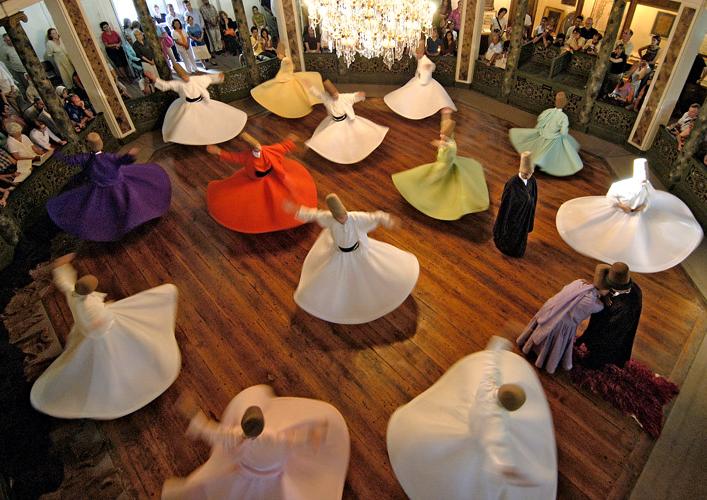
synthesis - Turn, turn turn

"Of what avail is frock, or rosary,
Or clouted garment? Keep thyself but free
From evil deeds, it will not need for thee
To wear the cap of felt: a darwesh be
In heart, and wear the cap of Tartary."
- Sa'di, Gulistan


'Tis the gift to be simple, Its a gift to be free,
'Tis the gift to come down where you ought to be,
And when we find ourselves in the place just right,
Will be in the valley of love and delight.

When true simplicity is gained,
To bow and to bend, we will not be ashamed,
To turn, turn, will be our delight,
Till by turning, turning we come round right
- Joseph Brackett, Simple Gifts

Thursday, December 15

reflections on Advent vespers

aka...the post stream that will not end.

As I mentioned earlier, we share space with the Lutherans and, from time to time, we hold joint services which highlight both our differences and our commonality.  I truly believe that this is the way forward in regards to ecumenicism, to not water down our liturgies to a milque-toast level, but to show what both binds us together and allow it to be a teaching moment showing our unique ways we understand our relationship to the Divine.  Anyways, this year we have been holding advent vespers which highlight the meditative, TaizĂ© tradition. 

I must say that I gain an incredible amount from Wednesday vespers, both during Advent and Lent and the 'non-traditional' aspect of this meditative service is exactly the sort of grounding which I am needing right now. 

With all of the uncertainty in my own life right now, as well as in the world at large, and how dark the future appears (both literally and metaphorically), I believe that our closing song really is appropriate.


Friday, November 18

Reimagining Bernardine - a consistant ethic of compassion

Wiki-creep is a fascinating thing.  Through a convoluted chain of links and related topics, I ended up reading Fr. McBrein's article about Cardinal Bernadine and the Seamless Garment (aka consistent life ethic) at NCR.  This got me to thinking...which leads to pondering...which leads to writing.

I believe that Bernadine's underlying premise, which is to construct a universally applicable ethical model regarding life is quite laudable.  Where I find a disagreement with him is to say that said life must be universally preserved.  There ARE fates worse than death for a person and to concentrate solely upon the life of an individual tends towards forgetting that we are all connected and that every action taken by a person has rippling effects that spread out to the ends of the earth.

In general, a person who must make such a choice needs to examine both the person 'at risk' as well as all of those directly affected by the decisions, taking into account the quality of the life, the life circumstances and take a critical look at the intent behind the decision.  They should call upon Holy Wisdom to guide and inform the decision, recognizing that each circumstance is unique and what is right for a certain person at a certain time may not be the right choice at a different time for a different person.

I recognize that these sorts of questions are never simple or easy.  There are no higher stakes and yet we must collectively recall that Primacy of Conscience and Free Will demand that the choice is not ours to make.  Each person must walk that road for themselves.  Our compassion affords us the ability to walk with them, to help and support them without judging as the Spirit walks with us, guiding and comforting, but not condemning.

That is, after all, what we would want in a time of need.  That is the essence of loving our neighbour as ourselves.

Thursday, November 17

Dancing in the Straw

Angels dancing on the head of a pin
So, it has a been a while since I have talked about the formal actions towards ordination. Indeed, I'm not entirely sure if I have spoken about this at all except in the vaguest of terms. A word of warning here, as the following statements could be misread.  I am not antithetical to academics, far from it, but a lack of ready application begs askance towards the intrinsic merit.

As I look more and more at differing programs, it appears so easy to become caught up in a whirlwind of theories, proofs, dogma and -ologies which are all vitally important for any serious candidate for ordination. It seems that anyone who has been called by God must be intimately familar with the ramblings of Rahner, the lectures of Lonergan and the homilies of Heidigger.  One must he hip to the hermeneutics in fashion,  conversant with the Christology du jour and versed in the vocabulary of the devoted elite.

Put in a 14th century context, a postulant must be able to answer (with attendant proofs) the famous question about angels and the head of a pin, as well as give context as to it's importance.  (As an aside, the question deals with the question of perfect, supernal beings existing without form (as pure entities of spirit) or if they have substance.)

Thinking about it brings to mind Aquinas and Dominic.  The first is the Angelic Doctor's famous statement, "All that I have written seems to me like so much straw compared to what I have seen and what has been revealed to me."  Why would arguably the greatest theologian of all time say this about the theology which he had written? Because he had had a direct, relevatory experience - a brush with the raw and ineffable Divine so incredibly different from the logics and proofs and counterarguments which comprise the Law.

The second is one of the few quotes we have from Dominic de Guzeman, spoken during his time studying theology. There was a famine which struck his city and he sold everything, including his precious books, to give alms to those in need. When questioned about such a rash and foolish gesture for a scholar, he replied,  "Would you have me study off these dead skins, when men are dying of hunger?"

A theologian is one who studies and ponders. That is my default state and something which comes as natural as breathing to me.  A priest is one who works and prays. That is what Dad has asked me to be.  Both have value and those categories are not mutually exclusive.  But quoting Jerome won't comfort a widow, prepare the greiviously ill for a happy death, feed the hungry or clothe the naked and, despite what I would like to become, this is about what She wants and has asked me to do.

My brass-tacks question to any course of study is if it helps one love God and/or love thy neighbour more fully?  If the answer is no, then mayhap there are better things to be doing.